
Short answer: The most useful mushroom types are visual groups based on features such as gills, pores, teeth, folds, cap shape, stem attachment, and where the mushroom grows. Start with the broad group, then compare several features and local reference material. A group label can narrow research, but it cannot confirm a species, edibility, toxicity, or safe handling decision.
Start with a broad description
What does a mushroom type mean?
When people search for different types of mushrooms, they may mean several things: a list of familiar names, a cooking category, a scientific group, or a visual field-guide category. Those meanings are not interchangeable. For a photograph, the safest first move is to describe the structure that is actually visible rather than jumping to a common name.
A broad type is useful because it gives you a smaller set of questions. Is the underside made of gills, pores, teeth, or folds? Is the cap separate from a central stem, attached to wood, or part of a cup or club shape? Does the mushroom grow alone, in a tight cluster, on soil, or on a log? These observations help you choose a better reference page and a more informative next photo.
- Describe visible structure before assigning a name.
- Use cap, underside, stem, base, substrate, and growth pattern together.
- Treat a type as a comparison category, not a final identification.
- Keep a safety boundary whenever an unknown wild specimen is involved.
Look underneath the cap
Gills, pores, teeth, and folds are high-value clues
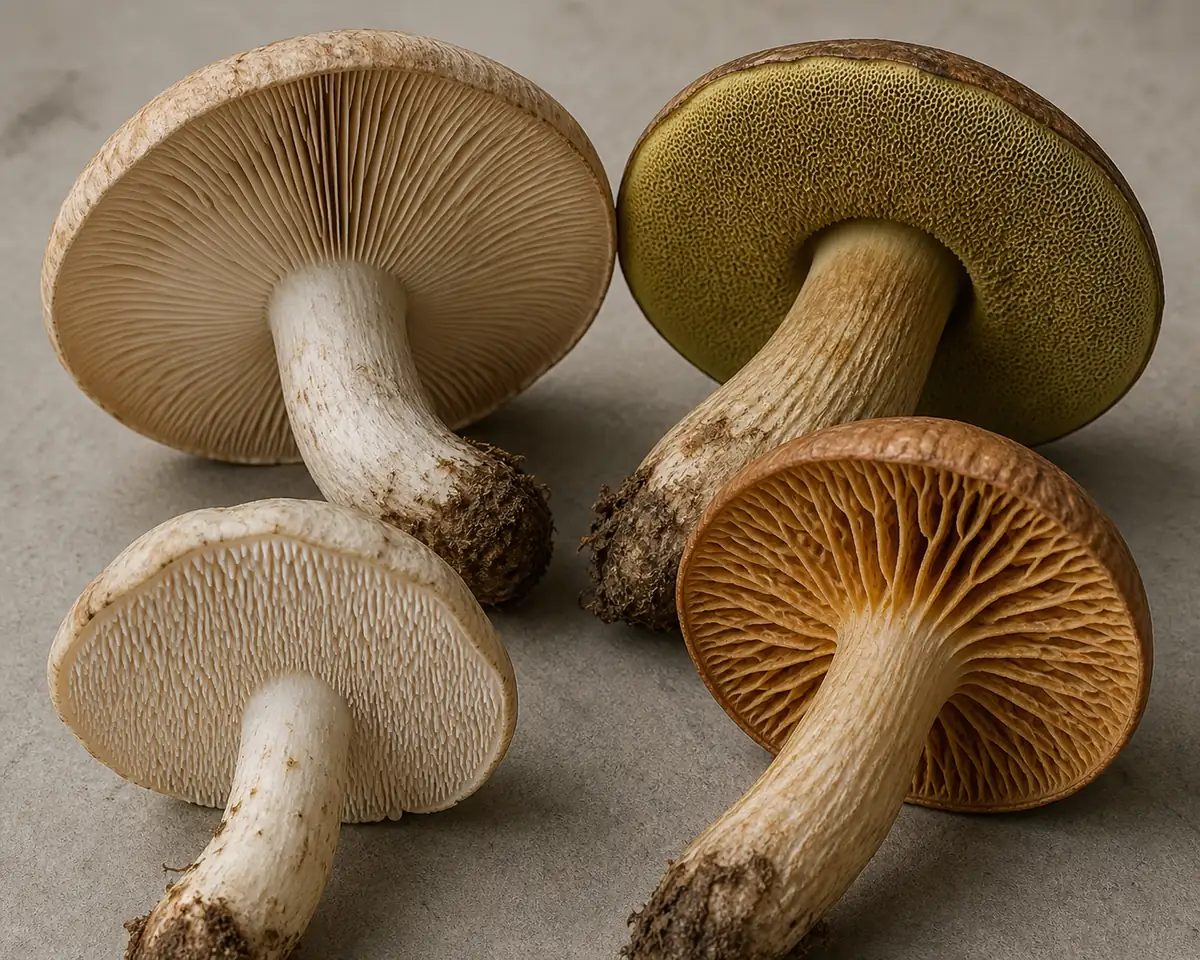
The underside often separates broad mushroom types more clearly than cap color. Gills look like plates or blades; pores look like a field of tiny openings; teeth hang down as short spines; folds or ridges appear as thicker, less regular lines. The attachment to the stem can add another useful observation, but it is easy to miss in a top-down photo.
A visual comparison should keep the whole relationship in view: cap edge, underside, stem, and the point where they meet. Do not treat one underside pattern as a shortcut to a species name. Age, moisture, lighting, damage, and regional variation can change what a photograph shows.
Gilled mushrooms
Gilled mushrooms have radiating plates beneath the cap. Record whether the gills appear crowded or widely spaced, whether they reach the stem, and whether the attachment looks continuous or separated. A side view is often more useful than a distant top view because it shows the cap profile and stem proportions too.
- Photograph the full underside, not only a small patch.
- Note spacing, thickness, color, and attachment without naming a species from one clue.
Pored mushrooms
Pored mushrooms show a sponge-like surface made of many small openings. The pore size, shape, color, and how the surface meets the stem can all be useful observations. Many pored forms grow on or near wood, but growth surface alone is not enough to identify a specimen or decide whether it is safe.
- Use even light so pores are not hidden by glare.
- Include the attachment point and the surrounding wood or soil when possible.
Toothed mushrooms
Toothed mushrooms produce short spines or teeth instead of flat gills or pores. The teeth may hang from a cap, branch, or irregular fruiting body. Photograph the underside and side profile together so the growth form is not confused with a damaged gilled surface.
- Show whether the teeth are dense, long, short, or arranged on branches.
- Keep the image text-free and let the surrounding notes carry the interpretation.
Folded or ridged undersides
Some mushrooms have thick folds or blunt ridges that do not look like thin, regular gills. The distinction can be subtle in a low-resolution image, so keep the cap margin, underside, and stem connection in focus. When the result remains uncertain, preserve the uncertainty instead of forcing a category.
- Use the term folded or ridged when the structure is not clear.
- Add a close side angle before comparing more specific names.
Notice the whole growth form
Cup, club, puffball, coral, and bracket forms
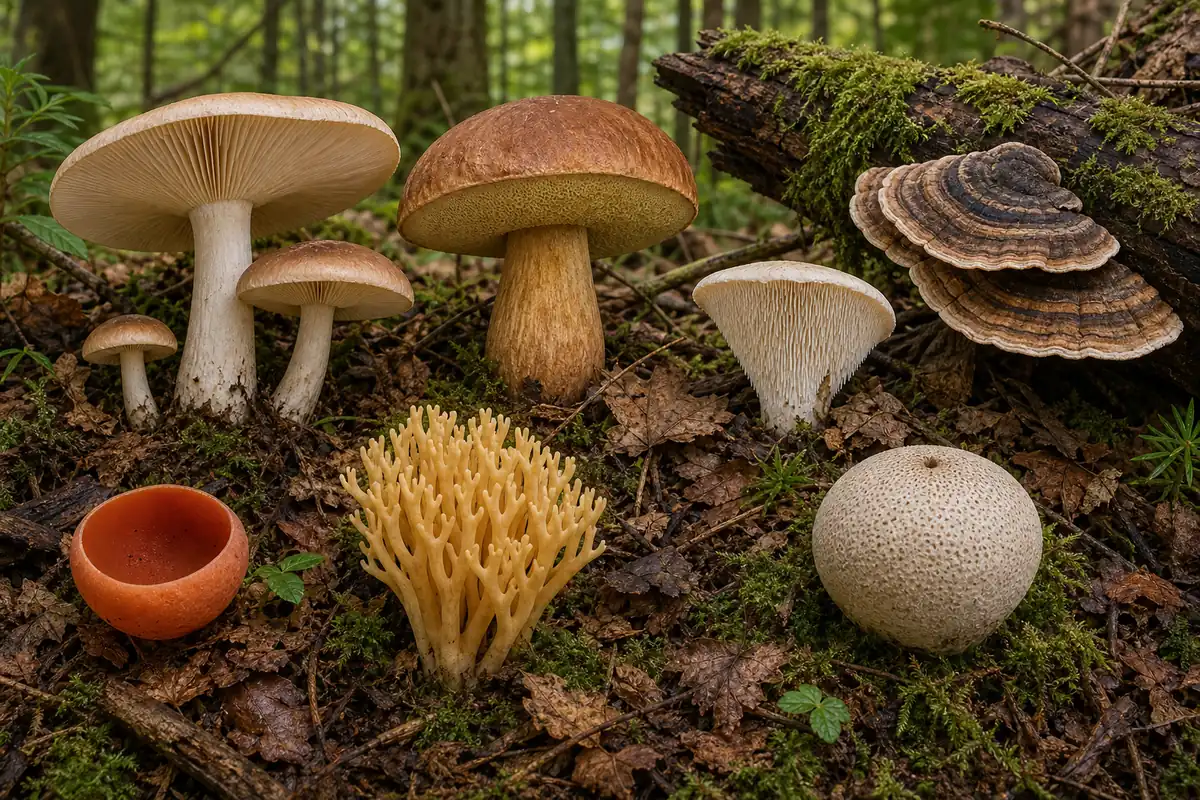
Not every mushroom has a familiar umbrella cap and central stem. Cup-shaped forms can look like bowls, club and coral forms may branch upward, puffballs can appear as rounded bodies without an open underside, and bracket-like forms grow from wood in shelves or fans. These descriptions are useful because they tell you what to photograph next and which reference section to open.
The habitat and growth pattern matter here. A shelf on a fallen log gives different context from a solitary ball in leaf litter, but context remains supporting evidence. The same broad appearance can occur across more than one unrelated group, and a photograph may not show maturity, internal structure, microscopic traits, or chemical reactions.
| Broad type | What to look for | Useful next photo | What it cannot prove |
|---|---|---|---|
| Gilled | Radiating plates under a cap | Underside and stem attachment | A species or edible result |
| Pored | Many small openings, often sponge-like | Pores, cap edge, and growth surface | That a wood-growing form is safe |
| Toothed | Short spines or hanging teeth | Side profile and underside | That a lookalike is harmless |
| Cup-shaped | Bowl-like body with an open interior | Interior, rim, and substrate | A final name from shape alone |
| Club or coral | Upright or branching fruiting body | Whole growth pattern and base | That a color match is specific |
| Puffball-like | Rounded body without a visible cap and gills | Surface, base, size, and maturity context | Safe eating or internal maturity |
| Bracket-like | Shelves or fans attached to wood | Attachment, layers, and underside | A universal rule for all wood-growing fungi |
Names are useful, but not enough
Common mushroom names can hide lookalikes
Common names are convenient for browsing, but they may vary between regions and can be shared by mushrooms that are not close relatives. A name in a marketplace, social post, or image caption is not the same as a verified identification. Even a familiar name can describe a group, a cultivated product, or a visual resemblance rather than one confirmed species.
Lookalikes are not a flaw in a guide or an identifier. They are an important signal that the visible evidence is shared. If two candidates have similar caps, compare the underside, stem base, substrate, growth pattern, season, and local range. The goal is not to make the first guess sound confident; it is to find the next observation that could separate the candidates.
- Keep the broad type and the common name as separate notes.
- Check whether the source is regional and whether the image shows the full specimen.
- Treat a lookalike list as a prompt for further comparison, not a list of safe alternatives.
- If the question involves eating or possible exposure, move from visual research to qualified local safety help.
Turn a list into better evidence
How to use a mushroom types list with photos
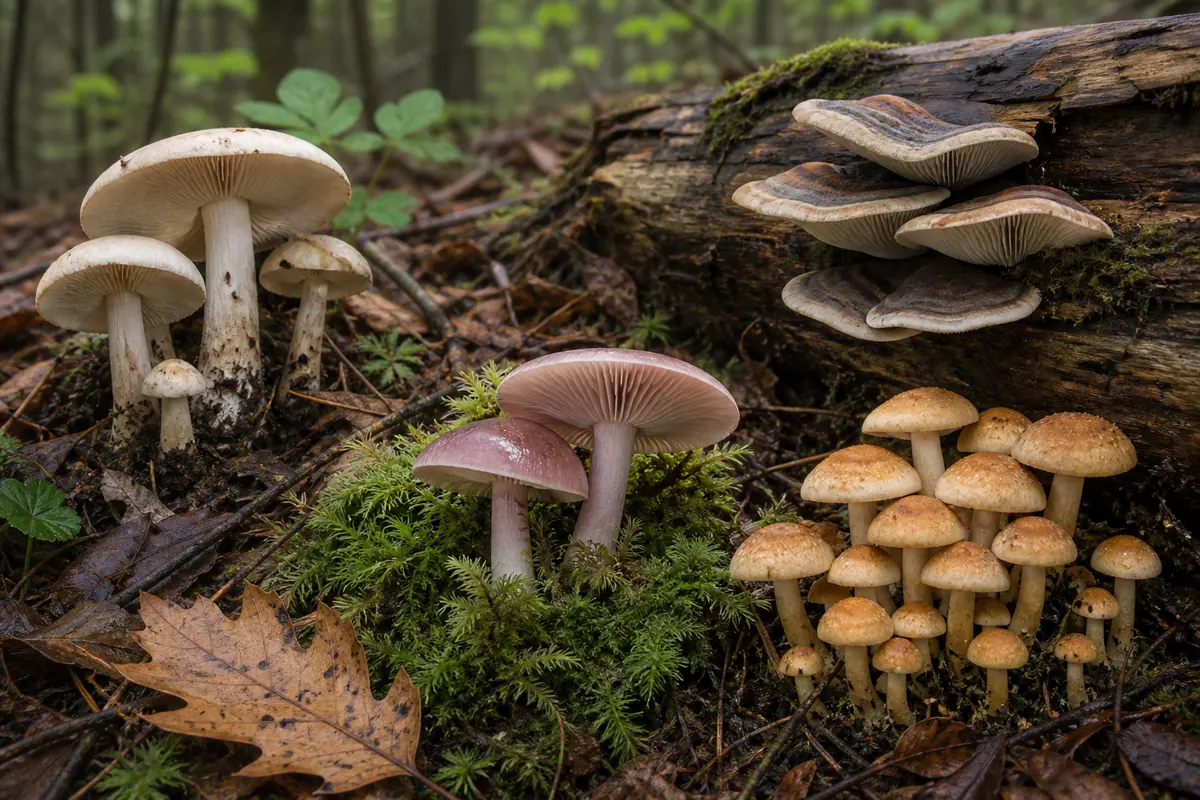
A useful mushroom types list should help you decide what to inspect next. Start with one wide photo that shows the substrate and growth pattern, then add a cap view, a side profile, and an underside or base view when those details are visible without disturbing the specimen. Record approximate size, date, weather, nearby trees, and whether it grew alone or in a cluster.
When you compare a photo with a list, match several independent features rather than counting how many colors look similar. A candidate that matches the cap but conflicts with the underside or growth surface deserves a lower confidence level. If you use the Mushroom Identifier, treat its result as a visual research lead and compare the suggested clues and lookalikes with a trusted field guide.
A four-angle photo sequence
Take the wider context first, then the cap, side profile, and underside or base. Keep the lens clean, use even light, and tap to focus before each frame. Do not place objects on an unknown mushroom for scale, and do not pick, taste, or handle it just to create a better image.
- Context: soil, moss, wood, leaf litter, or a cluster.
- Cap: outline, texture, margin, and color variation.
- Side: profile, thickness, stem proportions, and attachment.
- Underside/base: gills, pores, teeth, folds, ring, or visible base context.
A simple comparison note
Write three columns in your notes: what is visible, which broad types remain possible, and what evidence is missing. This keeps a types list useful even when the answer stays uncertain. It also makes a later conversation with a local mycologist, extension service, or poison-control resource more precise.
- Observed: a brown cap, pale gills, clustered growth on soil.
- Possible group: gilled mushroom; other groups not ruled out by one photo.
- Missing: base detail, mature underside, local context, and qualified review.
Keep the boundary visible
Why mushroom types cannot answer the safety question
Visual categories are designed to narrow research, not certify an unknown specimen. A photograph can miss changes caused by age, moisture, damage, lighting, and regional variation. It also cannot show every feature used in professional identification, such as microscopic structures, spore information, chemical reactions, internal condition, or a complete specimen base.
For that reason, this guide does not label any type as safe to eat. Do not eat a wild mushroom because it resembles a familiar name, appears in a list, matches an app result, or has a confident caption. If anyone may have consumed an unknown mushroom or has symptoms after exposure, contact local emergency services or a poison-control resource promptly.
- Use the page to improve observation and research vocabulary.
- Do not taste an unknown specimen or use an online image result as a food decision.
- Keep the whole photo set and field notes if a qualified local expert needs to review them.
- Follow local conservation, collection, and public-land rules when photographing or documenting fungi.
Common questions
Mushroom types FAQ
These answers keep the list useful for visual research while separating broad categories from species and safety decisions.
What are the main different types of mushrooms?
For photo-based research, useful broad groups include gilled, pored, toothed, folded or ridged, cup-shaped, club or coral-like, puffball-like, and bracket-like forms. These are visual starting categories, not a complete scientific classification or proof of edibility.
Are mushroom types the same as mushroom species?
No. A type can describe a visible growth form or underside pattern shared by many species. Species-level identification may require regional context, maturity, microscopic features, spore information, or expert review that a single photograph does not provide.
Can a mushroom types list tell me if a mushroom is edible?
No. A list, photo, common name, app, or visual match cannot make an unknown wild mushroom safe to eat. Keep edibility questions separate from visual sorting and use qualified local safety guidance.
Why do two mushrooms with different names look similar?
Unrelated mushrooms can share cap colors, shapes, gills, pores, growth surfaces, or habitats. Compare several features and keep possible lookalikes in view instead of relying on one memorable trait.
What photos help compare mushroom types?
Take a wider habitat photo, a cap view, a side profile, and an underside or base view when those details are visible without disturbing the specimen. Even light, a clean lens, approximate size, date, substrate, and growth pattern add useful context.
Can Mushroom Identifier identify a mushroom type from one photo?
It can provide a likely visual group, visible clues, possible lookalikes, and a next-step suggestion when the image contains enough evidence. Treat the result as a research starting point, not a confirmed species, toxicity, or edibility answer.
Further reading
Use specialist and safety references for the next step
These references support the visual-observation and safety boundaries in this guide. They do not turn a photograph into a confirmed species or food-safety certificate.
- MushroomExpert: Mushroom identification resourcesA specialist reference for mushroom terminology, keys, and feature-based comparison.
- USDA Forest Service: Mushrooms and ethnobotanyA first-party natural-history resource for additional field context.
- Poison Control: Wild mushroom poisoningSafety guidance for suspected exposure; use local emergency and poison-control contacts.