
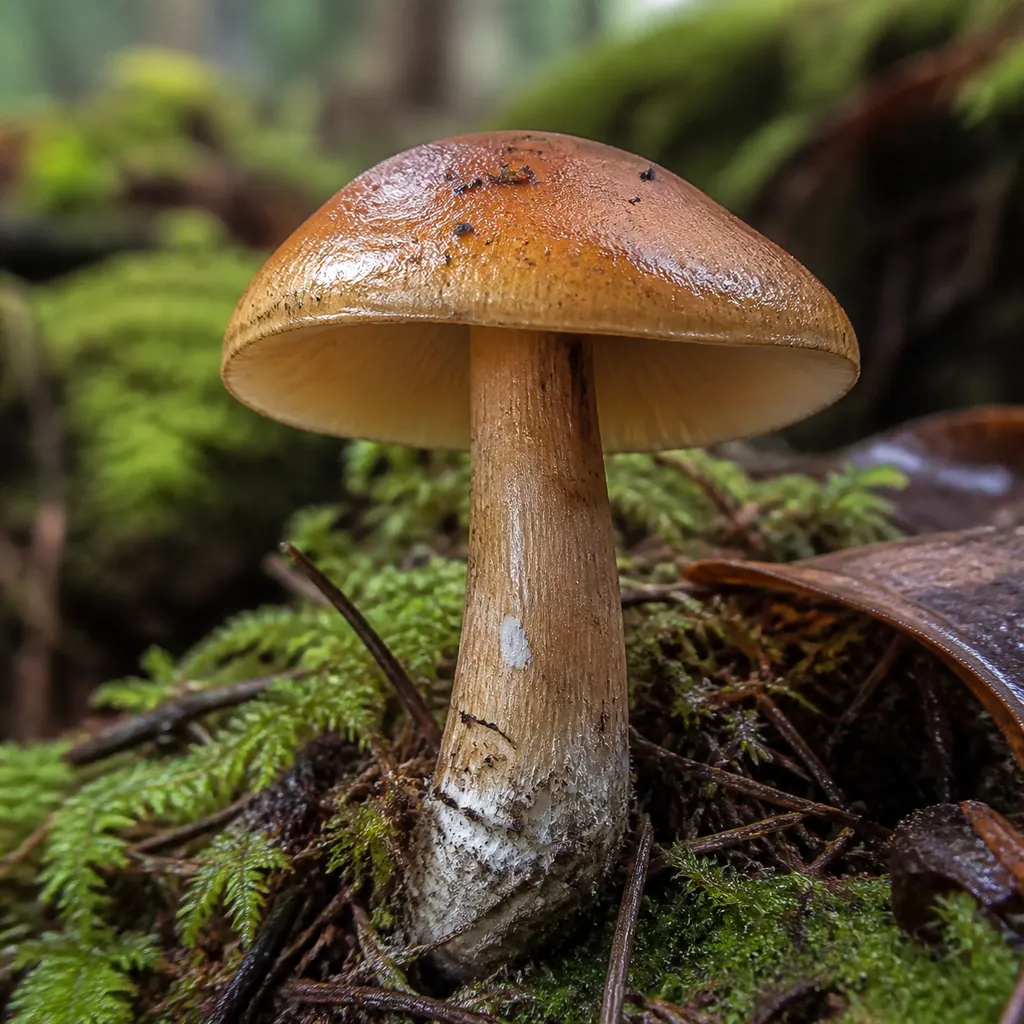
Short answer: Is this mushroom edible? A photo alone cannot answer that safely. Color, shape, a familiar common name, an app result, or a match in a picture chart can all be useful clues, but they do not establish species, region-specific toxicity, maturity, contamination, or preparation requirements. Do not eat an unknown wild mushroom. If someone or a pet may have swallowed one, contact a physician, poison control center, veterinarian, or other appropriate local service first; only then preserve a sample and ask for identification.
Start with the direct answer
Can you tell if this mushroom is edible from a photo?
The honest answer to “is this mushroom edible?” is usually: not from a photo alone. When someone asks, “Is this mushroom edible?”, the useful response is to describe what the image can and cannot establish before discussing food. A clear image may help narrow a broad group or show a feature worth checking, but safe eating depends on more than a visual resemblance. Some unrelated mushrooms share a cap color, silhouette, habitat, or common nickname. Closely related species can also differ in toxicity, and the important distinction may be hidden under the cap, at the base, inside the stem, or in a feature that changes with age.
A photo identifier is therefore best used as a first research step. It can organize a likely match, visible clues, possible lookalikes, and a better next photo. Those outputs help you ask a more precise question of a regional field guide or qualified identifier. They are not a food label, a toxicology screen, or permission to taste a specimen.
Keep the question separate from the action. “What visual group could this resemble?” is a research question. “Can I cook and serve this?” is a safety decision that needs local, expert confirmation and context that an image may not contain. If the answer matters because of a child, a pet, symptoms, or a planned meal, stop relying on image comparison and contact the appropriate professional service.
- Do not taste, lick, smell closely, or feed an unknown wild mushroom to a person or animal.
- Treat a confident app name as a hypothesis, not a confirmed identification.
- Record where and when the mushroom grew because region, habitat, and season change the comparison.
- Ask a local expert whenever food, health, a child, or a pet is involved.
Understand the missing evidence
Why a visual match is not an edibility test
Images are selective records. A top-down frame can hide gills, pores, teeth, folds, a ring, a volva-like base, bruising, or the way the stem attaches. A cropped close-up may remove the tree, soil, log, moss, or cluster pattern that makes a comparison meaningful. Even when the camera captures the right feature, glare, compression, color balance, moisture, damage, and age can make two different specimens look alike.
Safety also depends on geography and expertise. If you ask, “Is this mushroom edible?” the answer can change with the region, season, and local lookalikes. A common name can refer to different species in different places, and a guide written for one region may not apply to another. The same broad group can contain edible, irritating, poisonous, or simply unpalatable members. A photo service cannot reliably infer every local rule, contaminant, life stage, or preparation warning from one file.
That is why a responsible page uses uncertainty as information. Keep two or three possible groups open, list the feature that would separate them, and state what the photo does not show. Honest missing evidence is more useful than a precise label that encourages a risky decision.
Lookalikes defeat single-feature shortcuts
A red cap, white gills, a ring, or growth on wood can occur in many unrelated mushrooms. These clues may guide the next observation, but none is a universal edible or poisonous sign. Compare several independent features and keep the location attached to the record.
- Compare structure, attachment, habitat, and age together.
- Do not use color or a common name as a safety rule.
Hidden features matter
The underside, stem base, bruising, odor described at a safe distance, spore print, and growth substrate can all change a specialist comparison. Do not dig up or break a mushroom merely to improve a photograph. If a qualified identifier requests a specimen, follow that person's local handling instructions.
- Photograph what is already visible.
- Mark hidden or uncertain features instead of guessing.
A name is not a toxicology result
Even a correct species name does not replace region-specific advice about toxicity, contamination, preparation, allergies, or individual health. The page can help you formulate the question; it cannot turn an image into a safe-to-eat certificate.
- Use authoritative local sources for a food decision.
- Seek urgent help for a possible ingestion rather than waiting for an online reply.
Avoid the familiar-name trap
Common edible mushrooms still need local confirmation
Searches for common edible mushrooms can be useful for learning broad features, but a list is not a field clearance. Many popular edible species have close lookalikes, and the visible difference may be subtle or absent in a single photograph. If the question is “Is this mushroom edible?”, a page that calls one mushroom “common” is describing a category or a source's scope; it is not saying that every similar specimen in your yard, park, or forest is safe.
Use a trusted regional field guide, a mycological society, or an identifier who knows the local flora. Ask what diagnostic characters must be present, which lookalikes must be ruled out, and whether the specimen is in the right life stage. If the source cannot inspect those details, keep the mushroom for observation only.
This distinction also applies to cultivated mushrooms found in shops or gardens. A labeled commercial product has a supply chain and handling context that a wild specimen does not. Do not transfer confidence from a supermarket variety to an unknown mushroom that happens to share a color or shape.
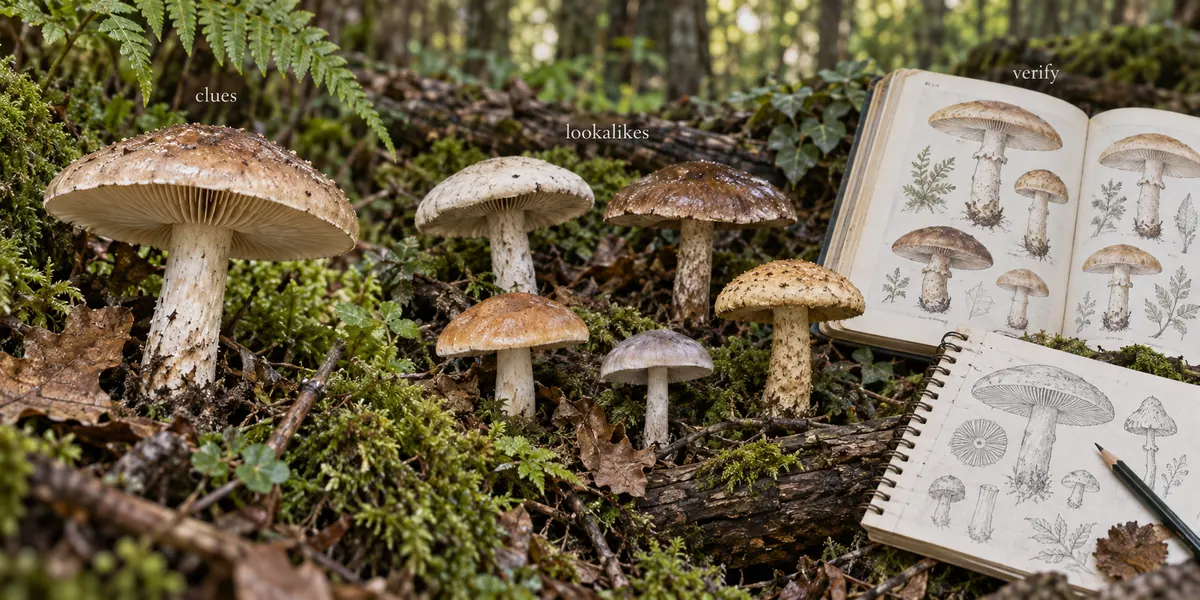
- Use lists to learn vocabulary, not to approve an unidentified specimen.
- Check the region, season, substrate, and lookalikes named by the local source.
- Ask for the evidence that rules out dangerous alternatives.
- Keep wild finds separate from food until the decision is independently confirmed.
Compare evidence, not labels
Edible mushrooms vs non edible: what to compare
The phrase “edible mushrooms vs non edible” sounds like a simple two-column test, but nature does not sort every specimen into a reliable visual pair. A useful comparison starts with what the camera can actually show: cap profile and surface, underside structure, stem attachment, base, growth surface, surrounding plants, season, and signs of damage. Write those observations before searching names so that the search does not lead you toward the first familiar image.
Use the table below as a question list. It tells you what to record and what remains unproven. If the question is “Is this mushroom edible?”, the table still does not identify a species, rank a mushroom as safe, or replace a local expert. When a row is missing, do not fill the gap with a guess; capture another respectful view or mark the feature unknown.
A spore print or specimen may be useful in a specialist workflow, but it still does not create a universal safety rule. Follow the instructions of a qualified local identifier, avoid spreading spores or material where prohibited, and keep any potential food decision outside the photo tool's scope.
| Feature to record | What a photo may show | What it cannot prove |
|---|---|---|
| Cap | Profile, margin, surface, scales, cracks, moisture | That a color match is the same species or safe |
| Underside | Gills, pores, teeth, folds, attachment | That one underside pattern rules out every lookalike |
| Stem and base | Ring, texture, swelling, visible attachment | What is hidden under soil or leaves |
| Habitat | Soil, wood, moss, nearby trees, cluster pattern | That a substrate gives an edible or poisonous verdict |
| Time and place | Date, region, weather, season, size | A complete local toxicology assessment |
| Damage or age | Bruising, insects, dryness, maturity clues | Whether cooking removes every hazard |
Use the tool in the right role
What a photo identifier can and cannot do
A photo identifier can be useful when you want a structured starting point. Upload a clear image, review the likely group, note the visible clues, and look at possible lookalikes. Then return to the field guide or local expert with a better question. This workflow is especially helpful when a beginner does not yet know the words for cap shape, gills, pores, attachment, or habitat.
The tool cannot examine a living specimen, smell it, test tissue, inspect microscopic traits, verify a location, or know whether a person or pet has been exposed. It cannot tell you that a wild mushroom is edible, that a poisonous mushroom is absent, or that cooking makes an uncertain specimen safe. So if you ask, “Is this mushroom edible?”, the answer from a photo tool must remain a research boundary rather than a serving instruction. It also cannot replace emergency services, poison control, a veterinarian, or a regional mycologist.
If you use an online result, save the original photo and the uncertainty with it. A better next photo may improve visual research, but it does not change the safety boundary. The practical output is a research lead and a next observation, not a serving decision.
- Use the result to choose what to photograph next.
- Read lookalike notes instead of stopping at the top label.
- Keep the original file, date, place, and habitat notes together.
- Move to local professional help when food, symptoms, children, or pets are involved.
Act before researching
What to do after a possible bite, contact, or pet exposure
If a person may have swallowed a wild mushroom, do not use the question “Is this mushroom edible?” as a reason to wait. Contact a physician or local poison control center immediately and follow that service's instructions. Do not wait for an app result, a social-media reply, or the appearance of symptoms before asking for help. If a child is involved, say so clearly. If a pet may have eaten a mushroom, contact a veterinarian or animal poison service promptly.
The North American Mycological Association advises securing help first and then trying to obtain the same mushroom for professional identification. Keep available material in a paper bag or waxed paper rather than plastic and refrigerate it until it can be examined, if local professionals ask you to preserve it. Note the collection place because soil, lawns, roadsides, and industrial areas can add context or contamination concerns.
Do not induce vomiting, give home remedies, or make a meal-time decision from a web page unless a medical or poison-control professional specifically instructs you. Preserve the original photo, the remaining material, the time of possible exposure, the amount, and any symptoms. Online content can help organize information for a professional; it should never delay care.
- Contact local emergency services, a physician, poison control, or a veterinarian according to the situation.
- Tell the professional whether the exposure involves a person, child, or pet and when it happened.
- Preserve a sample only as directed, using paper or waxed paper rather than plastic.
- Bring photos, location notes, and the original mushroom material if professionals request them.
Turn uncertainty into a useful request
How to ask a local expert a useful question
A specialist can work faster when the question includes the evidence and the gaps. Start with the exact place or region, date, habitat, nearby trees or substrate, growth pattern, approximate size, and whether anything touched or consumed the mushroom. Attach several unedited views: cap from above, side profile, underside, stem, base when visible, and the surrounding scene.
Say what you do not know. “The base is hidden” or “the underside is out of focus” helps an identifier judge the limit of the record. Do not describe a guess as a fact, and do not omit a lookalike because it makes the story less tidy. If the question is “Is this mushroom edible?”, say that directly so the expert can give the appropriate safety boundary or refer you to poison-control resources.
Use local mycological societies, extension services, land managers, medical professionals, poison-control centers, or veterinarians as appropriate to the situation. A general online identifier can prepare the notes, but the decision-maker should have the regional expertise and the ability to examine the relevant evidence.
- Lead with region, date, substrate, and whether there was exposure.
- Attach multiple angles and keep the original files available.
- List uncertainties and possible lookalikes rather than hiding them.
- Ask the expert what evidence is needed before any food decision.
Mushroom Safety FAQ
Questions people ask before eating a wild mushroom
These answers keep visual research separate from an edible, poisonous, medical, or pet-safety decision.
Is this mushroom edible if an app gives it a high-confidence name?
No. If you ask “Is this mushroom edible?” a confidence label is still a visual hypothesis, not a toxicology result or local expert confirmation. Do not eat an unknown wild mushroom based on an app, photo, or common name.
What are common edible mushrooms, and can I compare my find to a list?
Lists can teach broad features and vocabulary, but they cannot clear an unidentified specimen. When the question is “Is this mushroom edible?”, remember that many edible mushrooms have dangerous lookalikes, and the relevant differences can depend on region, life stage, habitat, or hidden structures.
Can AI identify poisonous mushrooms from a picture?
AI can suggest possible visual matches and lookalikes, but it cannot reliably decide that a wild mushroom is poisonous or safe from a photo. Treat the result as a research lead and consult local professionals for safety questions.
What should I do if someone may have eaten a wild mushroom?
Contact a physician or local poison control center immediately and follow its instructions. For a pet, contact a veterinarian or animal poison service. Do not wait for an online identification result or symptoms before seeking guidance.
Should I keep a mushroom sample after possible poisoning?
Secure medical or poison-control help first. If professionals advise preserving material, NAMA recommends paper or waxed paper rather than plastic and refrigeration until examination. Follow the local service's instructions.
Does cooking make an uncertain mushroom safe?
Do not assume that cooking removes every hazard. Preparation, species, region, dose, contamination, and individual health can all matter. A possible food decision requires qualified local guidance, not a photo comparison.
Authoritative sources
Use local professional guidance when the stakes are higher
These sources support the safety boundaries in this guide. They do not turn a photo into a species or edibility certificate.
- North American Mycological Association: Mushroom PoisoningsAdvises contacting a physician or local poison control after suspected poisoning, then preserving material for professional identification when instructed.
- American Association of Poison Control CentersUse the local poison-control pathway for urgent exposure guidance in the United States; other countries have their own services.
- MushroomExpert: Mushroom identification resourcesA specialist reference for comparing mushroom features and terminology; it is not a substitute for a local safety decision.